
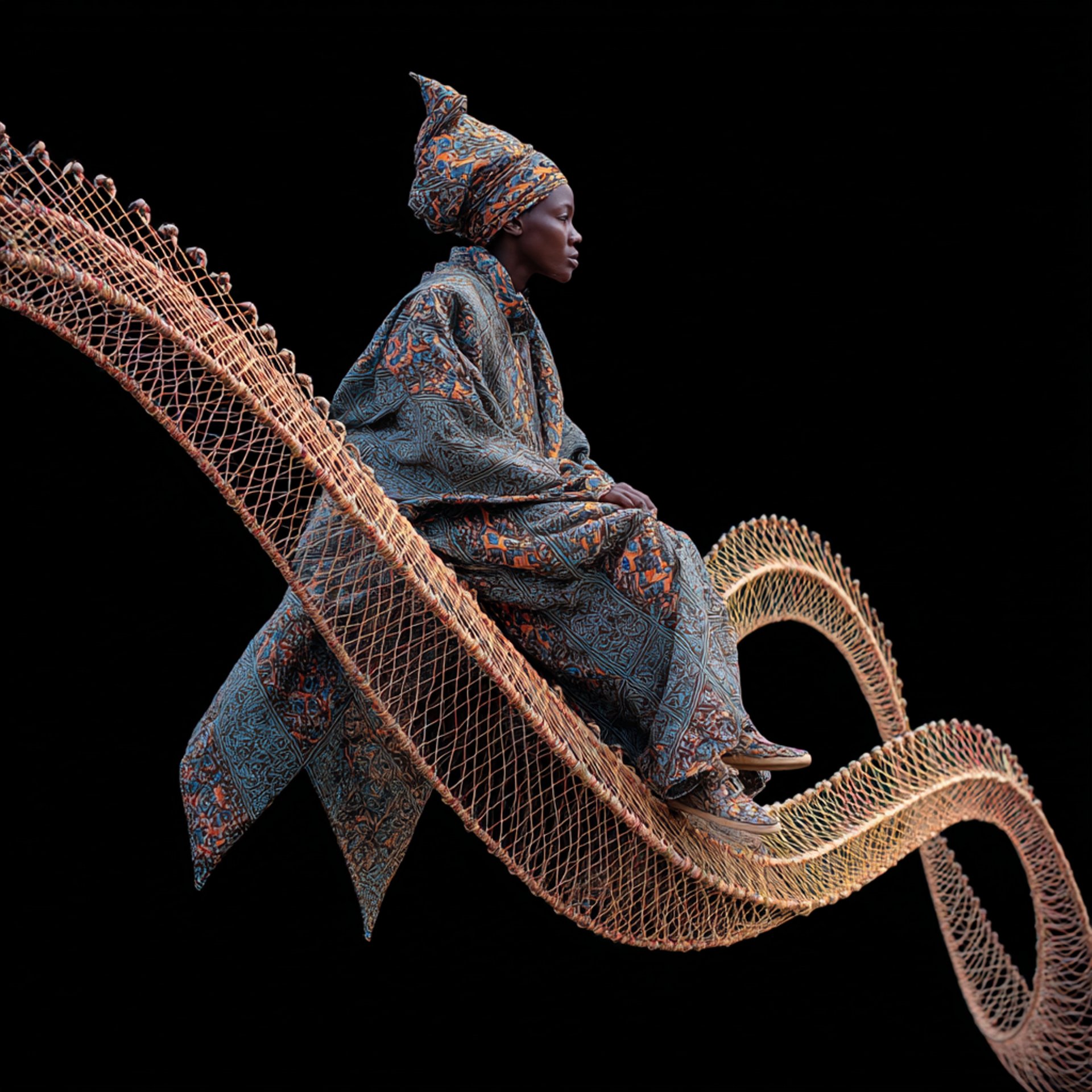
The Weaver Who Waited
A story spun from time, longing, and the silent strength of waiting.
The Weaver Who Waited
(from the Elegy of Almosts)
She wove time into longing.
Her loom was the branch of a split iroko, its fibres stretched with sinew from the day her husband vanished beneath the tide. Not drowned—vanished. Not dead—taken. The villagers said he had defied the ocean gods. The priests said he had walked into myth. She said nothing. She set up the loom.
Each day, she wove.
She wove when the yam flowers bloomed early, she wove when the harmattan cracked her lips. She wove when children were born and named and grew and forgot what he looked like. She wove through war, through peace, through the replanting of the groves.
And the cloth grew.
It was not meant to be worn. It was not meant for sale. The elders, who once laughed, began to fear it. For in her weaving, the tides shifted. Fish began arriving from other shores. Messages braided themselves into the cloth—maps of stars, songs from drowned cities, sigils from forgotten gods. Some nights, she disappeared into the cloth itself, hands glowing, hair weightless, eyes glassy as tidewater.
Still, she wove.
Then, in the thirty-first year, when her hands had grown thin and her skin was patterned with memory, the sea brought him back.
No ship. No explanation. Just a man walking out of foam.
She was not at the shore. She was at the loom.
And when he found her, she looked up, blinked once, and said, “I feared you might return before I was finished.”
He knelt. His breath on her face was nutmeg and sweetness, warm like bread sitting just out of the oven. “What have you made?”
“A bridge,” she whispered. A single tear slid out of her eye. “Between what was and what was almost. If you had come sooner, it would have torn.”
He gave her the smile that asked her if that was all she had to say to him. The very same smile that had made her willing to dream of a lifetime sharing a bed with him. 'And now?' he asked with the point of his smile gleaming on his teeth.
And she reached for the knife, and she cut the final thread.
The world inhaled.
The sea remembered its dead. The sky bent to touch the cloth. Time slipped slightly sideways.
'And now, the worlds can never meet.'
She collapsed.
And he, cradling her in hands not aged a day, whispered the only chant he remembered: “Wait again. Wait again.”
But she could not.
This was her elegy. The weaver waited. And in the waiting, wove a world that almost was.


Waiting
Each thread a memory, each pattern a silent story told.


