
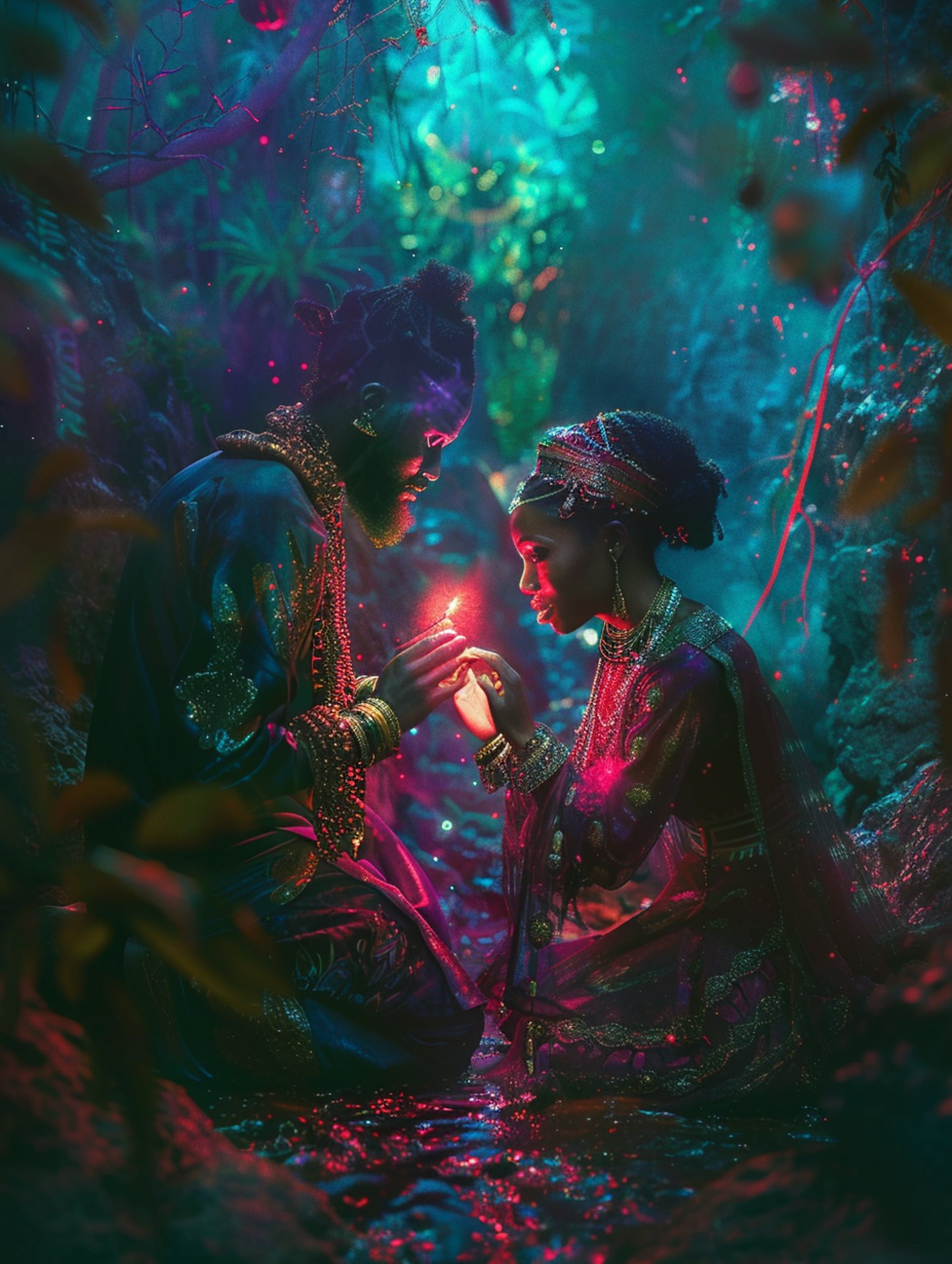
Afromantasy Awakens
Reclaiming African myths to inspire bold new stories.
Afromantasy: Where the Physical Becomes Magical and the Everyday Becomes Beautiful
Afromantasy is a visionary genre rooted in African civilisation, myth, and memory. It is not a subgenre of Western fantasy — it is a world of its own. It reimagines power, beauty, and wonder through the lens of African philosophies, mythologies, social systems, and storytelling traditions. Afromantasy does not seek permission to exist. It builds its own canon, draws from its own worlds, and restores the place of Africa in the landscape of speculative storytelling.
Afromantasy is where rivers speak, tools remember, trees curse, masks divine, and a child’s silence can change the weather. It is romantic in the deepest sense — where love, loss, legacy, and beauty are infused with consequence and myth. It is speculative, not in imitation of medieval Europe, but in exploration of what African civilisations might have become, or did become, before the archive was burned.
Afromantasy is where the material becomes mythic. A bowl of red rice is no longer just food — it is prophecy. A lock of hair is a treaty. A spell is not incantation, but innovation. It is a genre where the sacred and the scientific merge — where the memory of blacksmiths, midwives, cosmologists, scribes, and seed-keepers form the foundations of magical worlds.
How Afromantasy Differs from Afrofuturism and Africanfuturism
Afrofuturism and Africanfuturism imagine the future — sometimes through technology, diaspora, or speculative science. Afromantasy reclaims the past and reenchants the present. Its centre is not outer space, but inner civilisation. It is not set in a dystopia, but in alternative realities rooted in African worldviews.
It is not the Western fantasy of elves and dragons, nor the colonial trope of jungle and savagery. Afromantasy builds from systems: mythological memory, divine law, consequence, ritual, justice, beauty, and social harmony. It is speculative history, civilisational longing, and restorative dreaming — all at once.
The Afromantasy Worlds
Afromantasy is not one world — it is a constellation. Each realm emerges from different regions, logics, languages, and losses. Among them:
The Spirits of Mendacies: A mythic indictment of colonial deceit, where truth is a god, and lies walk with names.
The Shadow Storm: A tale of exile and memory, where forgotten gods return in a time of empire.
The Brotherhood of Nsibidi: A secret order of symbol-masters who preserve African script-magic through war and erasure.
The Canopy of Kewels: A jungle realm of flowering power and contested thrones.
The Shadow of Leopold: A haunting world of extraction, ghost economies, and stolen memory.
The Codex of African Myths of Utilitarian Magic: Where forgotten African innovations are reimagined as magical technologies of survival, beauty, and resistance.
Each world has its own tone, visual palette, myth-logic, and rule system. Together, they form the early canon of Afromantasy.
Magic Systems and Sacred Tools
Afromantasy magic is not arbitrary. It draws from African ritual, science, engineering, and spiritual philosophy. Its tools are meaningful, named, and encoded with civilisational logic.
From the Oracle Bone Mask to the Nightsoil Tiles, from Echo Beads to Binding Gods, every artefact carries purpose and story. This is magic as infrastructure, not spectacle. Not explosions, but systems.
The Codex of African Myths of Utilitarian Magic is a key pillar of this genre — reimagining lost African knowledges, tools, and disciplines as magical systems. Each tale in the codex explores how innovation and enchantment coexisted in a continent that birthed its own sciences, but whose archives were scattered, erased, or burned.
Visual Language and Cultural Memory
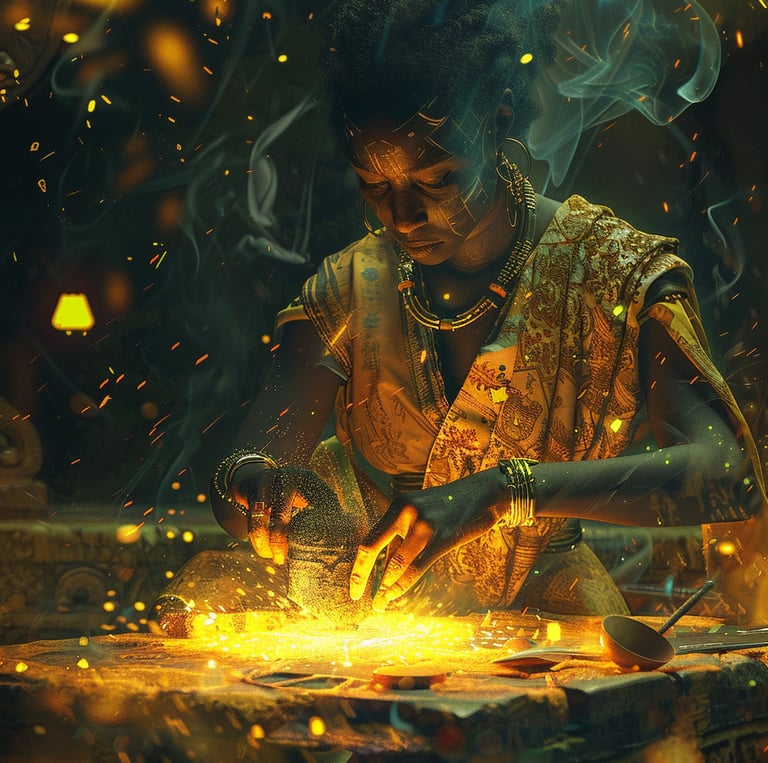
Afromantasy is deeply visual. It is the shimmer of gold leaf on indigo cotton, the gleam of a blade etched with myth, the elegance of hair coiled into a treaty. Maps are sacred. Clothes are coded. Everything means something.
This site houses a gallery of Midjourney-generated images capturing the genre’s signature visual identity: royal blues, sunset reds, verdant greens, earth ochres, and radiant golds. Every detail evokes memory, power, or place.
Clothing systems, sacred tools, and magical topographies will all be documented here. This is the visual bridge into Afromantasy.
Tales and Teasers
Only tasters live here. The full books are coming. You will encounter:
Cursed rings and jealous queens
Sister-gods bound by vengeance
Rogue guilds of magical architects
Inventors who weave spells from seed and sky
Trysts that end in floods
These are not background stories. They are literature. And they are part of the Afromantasy canon.
Part of the Afrodeities Universe
Afromantasy is a sovereign pillar within the Afrodeities Canon — the grand project restoring African mythology, civilisational dignity, and speculative authority to the global imagination.
It connects directly to:
AfricanMythology.com and NigerianMythology.com — for source cosmologies
Afrodeities.org — the civilisational corrective
Codices like the Magic Codex, the Mythic Codex, the Codex of Magnificence and Mourning — for structural placement
This is not fan fiction. This is not nostalgia. This is how the future will remember Africa.
Ask Us
What is afromantasy?
Afromantasy blends African myths with fresh, imaginative storytelling.
Why focus on African myths?
Because these stories were often erased or misunderstood, and they deserve to be heard.
How do you choose which myths to include?
We dive deep into West, Central, East, and Southern African traditions, honoring their unique voices and histories.
Our goal is to reconnect with ancestral wisdom and inspire new tales.
Can anyone enjoy afromantasy?
Where can I read your stories?
Stories are available on our site and select partner platforms.